
If you’re looking for a more reliable and proactive maintenance strategy, it’s time to implement a preventive maintenanceschedule.
Scheduling maintenance is often cumbersome, with a multitude of tasks to monitor and technicians to keep track of. It can quickly become overwhelming without a solid plan in place.
A preventive maintenance schedule provides you with the framework to elevate your maintenance to the next level. When combined with a computerized maintenance management system, or CMMS, this approach can save you time and reduce your maintenance costs.
What Is a Preventive Maintenance Schedule?
A preventive maintenance schedule, or PM schedule, is a detailed plan that outlines when specific maintenance tasks, such as regular check-ups, should be performed on equipment to prevent breakdowns and extend its lifespan.
Unlike reactive maintenance, where repairs are made after equipment fails, preventive maintenance ensures that routine inspections, servicing, and repairs are carried out at regular intervals. The preventive maintenance schedule may be based on time (such as weekly or monthly) or usage metrics (such as operating hours or production cycles).
The purpose of the PM schedule is to reduce unexpected equipment downtime, improve operational efficiency, and lower long-term maintenance costs. By performing regular upkeep and consistently documenting what that entails, facilities can identify and address potential issues before they escalate into costly failures.
Additionally, a well-planned PM schedule helps optimize resource allocation, ensuring that maintenance personnel, tools, and replacement parts are available when needed. However, it will look different for every operation. The number of assets, their maintenance intervals, and the number of available technicians are all important variables that will shift from schedule to schedule. There is no one-size-fits-all schedule; instead, one unique schedule and timeline will fit your needs.
In industries where machine reliability is crucial, such as manufacturing, healthcare, or transportation, implementing an effective preventive maintenance schedule is essential for maintaining operational continuity. Ultimately, a preventive maintenance schedule is a proactive approach that keeps equipment in optimal condition while preventing unexpected disruptions that can affect productivity.
What Is a Preventive Maintenance Scheduler?
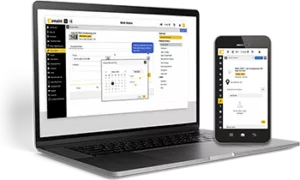
A preventive maintenance scheduler is a software solution that allows you to build an interactive schedule to plan out regular maintenance tasks. It is a tool that makes inventorying assets and managing maintenance intervals significantly easier, thanks to real-time data and the ability to schedule recurring work orders.
With a preventive maintenance scheduler, you can schedule a task and send a technician to the job site with all the necessary information in just a few clicks. Exact functionality will differ from tool to tool, but most preventive maintenance schedulers are easy to use, come with data-driven insights to better plan maintenance, and provide automation tools to streamline your scheduling process.
Preventive Maintenance Plan vs Preventive Maintenance Schedule
| Aspect | Preventive Maintenance Plan | Preventive Maintenance Schedule |
|---|---|---|
| Purpose | Defines the overall preventive maintenance strategy and objectives | Defines when and how often specific maintenance tasks are performed |
| Focus | What needs to be maintained and why | When maintenance activities occur |
| Level of Detail | High-level, strategic | Detailed, tactical, and time-based |
| Scope | Covers assets, maintenance standards, goals, and best practices | Covers dates, intervals, frequencies, and timelines |
| Time Horizon | Long-term (months to years) | Short- to medium-term (daily, weekly, monthly) |
| Key Components | Asset list, maintenance philosophy, risk assessment, resource planning | Task lists, frequencies, due dates, work order triggers |
| Flexibility | Relatively stable and infrequently changed | Frequently updated based on usage, condition, or failures |
| Audience | Maintenance managers, reliability engineers, leadership | Technicians, planners, supervisors |
| Example | All critical pumps will follow OEM-based preventive maintenance to reduce downtime by 20% | Pump A seal inspection every 30 days; lubrication every 500 operating hours |
| Role in CMMS | Forms the foundation for PM setup and asset hierarchy | Drives automated work orders and maintenance calendars |
While the terms “preventive maintenance plan” and “preventive maintenance schedule” are often used interchangeably, they refer to different aspects of a maintenance strategy.
A preventive maintenance plan outlines the overarching strategy for maintaining equipment, focusing on what tasks need to be done, who will do them, and what resources are required. It includes documentation on maintenance procedures, safety protocols, and expected outcomes, ensuring that maintenance efforts align with operational goals. It is a high-level plan for preventive maintenance that serves as a framework for project planning.
On the other hand, a preventive maintenance schedule is the timeline that dictates when maintenance tasks will happen. It details the frequency and timing of each task, ensuring that maintenance occurs before equipment breaks down. The schedule helps organize activities and evenly distribute the workload across the maintenance team.
Maintenance schedules are the actionable parts of a maintenance plan. The plan is more strategic, while the schedule is operational, ensuring the day-to-day execution of the plan. Both are essential for an effective preventive maintenance system. However, without a solid PM schedule, even the most comprehensive maintenance plan can fail to deliver results. Plans are great on paper, but improperly scheduled tasks can lead to equipment failures and other inefficiencies.
Why Are Preventive Maintenance Schedules Important?
Preventive maintenance schedules are essential for maintaining equipment health and longevity as well as ensuring smooth operations. A well-organized schedule ensures that equipment is serviced before problems arise, reducing the risk of unexpected failures and costly downtime. Additionally, preventive maintenance schedules contribute to better resource management, allowing organizations to allocate time, manpower, and spare parts more efficiently.
Moreover, preventive maintenance schedules also improve safety in the workplace by ensuring that all machines and systems function correctly, thereby minimizing the risk of accidents. This is particularly important in industries such as manufacturing, healthcare, and transportation, where equipment failure can pose significant safety risks.
Overall, a preventive maintenance schedule helps streamline maintenance processes, ensuring timely interventions, cost savings, and the continuous smooth operation of critical systems.
Benefits of Preventive Maintenance
The benefits of preventive maintenance go hand in hand with those of a preventive maintenance schedule. In a way, they are one and the same, as the PM schedule is simply a framework to complete preventive maintenance.
By performing maintenance tasks regularly, you can catch minor issues before they turn into significant, costly repairs. This extends equipment life, helping companies avoid expensive replacements. When equipment runs at peak efficiency, it uses less energy, which leads to reduced operational costs. Preventive maintenance is a key fixture in keeping machinery functional, safe, and cost-effective.

Types of Preventive Maintenance Schedules
There are several types of preventive maintenance schedules, each designed to meet specific operational needs. Which type of PM schedule you should use will depend on your assets, resources, and how you already conduct maintenance.
Time-Based PM Schedules
This type is the most common and involves performing maintenance tasks at predetermined intervals. For example, servicing machinery every three months or replacing filters two weeks after they were last changed. Time-based schedules are ideal for equipment that operates continuously or in high-demand environments. There are two types of time-based schedules: fixed and floating. Fixed is always on set dates, while floating takes prior maintenance into account.
Meter-Based Preventive Maintenance Schedules
Also called a usage-based schedule, maintenance is triggered by the actual usage of equipment. For instance, a vehicle might undergo maintenance after every 10,000 miles driven. This type of schedule is ideal for equipment where wear and tear depend on use rather than time.
Predictive Maintenance Schedules
Predictive maintenance relies on condition-monitoring technologies like sensors to assess the real-time state of equipment. Maintenance tasks are only performed when specific indicators, such as vibration levels or temperature thresholds, signal that maintenance is necessary. This is an efficient approach for minimizing unnecessary maintenance while preventing unexpected failures. Due to the uncertain nature of maintenance needs, this schedule will be much less fixed than other methods.
Seasonal PM Maintenance Schedules
For equipment that is only used during specific times of the year, a seasonal maintenance schedule is ideal. For example, HVAC systems might require maintenance before the start of summer or winter to ensure optimal performance during peak use.
The Difference Between Fixed and Floating Preventive Maintenance Schedules
PM schedules are separated into either fixed or floating types.
A fixed preventive maintenance schedule follows a strict routine where maintenance tasks are performed at regular intervals, regardless of whether previous tasks have been completed. For example, if you inspect meter gauges every other Tuesday, this would be considered a fixed schedule. This type of schedule is predictable but may lead to overlapping tasks if prior maintenance isn’t completed on time. However, its benefits stem from its stability, which allows for certainty regarding scheduling.
In contrast, a floating preventive maintenance schedule is based on asset usage and past maintenance history. Tasks are scheduled only after the completion of previous work orders. This means that if one maintenance task is delayed, future tasks are postponed until the earlier one is closed. While this method provides more flexibility, it also requires careful monitoring and tracking to ensure nothing falls through the cracks.
How to Create a Preventive Maintenance Schedule
Establishing a preventive maintenance schedule takes careful planning to make sure you’ve covered all the bases. These are the steps you should take when creating a new PM schedule.
1. Inventory Your Assets
Before you can schedule any work, you need a list of assets that will require regular maintenance. This does not need to be every single asset in your operation. Not every piece of machinery requires strict routine maintenance. Identify the ones that absolutely do, whether due to age, criticality, or design, and create an inventory list from there. Remember to mark down their make, model, location, required parts, and maintenance history.
2. Sort Critical Assets by Priority
Once you have a list of the most vital assets, you can create a maintenance workflow to keep them up and running. Prioritizing certain assets will make sure that the most important or at-risk machines get immediate attention. Consider certain questions, such as:
- Which items have the highest repair costs?
- Are there any failure modes that can be averted with PM?
- How fast is the rate of depreciation on these assets?
To identify assets with overdue tasks, you can calculate the scheduled maintenance critical percent. Be sure to also record data on your work orders and unplanned downtime for each machine. Estimate how long you previously spent on preventive maintenance to troubleshoot common issues.
3. Align Your Maintenance Intervals
Next, it’s time to decide how often you want to schedule assets to receive routine maintenance. What this looks like will depend on the type of schedule you use.
The best source of information for both time-based and usage-based intervals is the OEM guidebook that comes with any installed equipment. It should tell you the recommended schedules and how to put on spare parts. Ask your technicians and engineers about the frequency of breakdowns.
Now would also be a good time to design a preventive maintenance schedule template. A schedule form should include fields for the description, condition, useful life, and date checked.
4. Schedule Recurring Tasks
Now that you have a list of assets and their required intervals, itemize them by maintenance tasks and how often to perform them. Then you can begin scheduling tasks at desired intervals. This is a step where a CMMS can make your life much easier.
5. Verify and Adjust for Continuous Improvement
A maintenance schedule is not set in stone. It should always be improved upon and tweaked as necessary. Gather maintenance reports and identify where you can make corrections to remove inefficiencies or add extra support. No initial schedule is ever perfect. Use that to your advantage to hone your skills and enhance your preventive maintenance.
Preventive Maintenance Schedule Examples
One example of preventative maintenance would be a team that is required to routinely check an HVAC system and electric generators. The team could schedule the assets for maintenance after every 100-200 hours of operation, utilizing a meter-based schedule. Completing the preventive maintenance on time would ensure the system does not experience unexpected failures that may affect production timelines.
Another example of a critical preventive maintenance activity is keeping rotatable parts lubricated. To prevent premature failures from wear and tear, teams should use a fixed schedule for part lubrication that aligns with the manufacturer’s instructions.
Best Practices for Successful Preventive Maintenance Scheduling
To ensure a successful preventive maintenance scheduling process, use one of several strategies to improve efficiency and consistency. These help businesses maximize equipment uptime, reduce unexpected failures, and optimize the efficiency of their preventive maintenance schedules.
1. Utilize a Preventive Maintenance Scheduler
Using a computerized maintenance management system (CMMS) or a dedicated preventive maintenance scheduler is one of the most effective ways to manage tasks. These tools automatically schedule tasks, send reminders, and track completed activities, ensuring nothing falls through the cracks.
2. Properly Prioritize Critical Assets
Not all equipment is equally important. A misstep in prioritization can lead to an entire schedule falling apart. Make sure you properly prioritize each piece of equipment based on its critical role in operations and avoid generalizing groups of machines. For instance, a machine that directly impacts production lines should be scheduled for frequent and thorough maintenance, doubly so if that machine is older or often has issues. Meanwhile, non-essential equipment can have less frequent checks.
3. Fully Commit to the Schedule
A preventive maintenance schedule cannot be treated like a suggestion. For it to succeed, it needs buy-in from all teammates across the organization. Avoid delays at all costs and ensure that maintenance is performed correctly and on time. If a backlog builds up, focus on clearing it as efficiently as possible. Use your schedule as a source of truth to guide your maintenance practices.
4. Continuously Make Adjustments
Regularly review the effectiveness of your schedule by analyzing failure rates, repair times, and costs. If certain equipment breaks down frequently despite regular maintenance, it may be necessary to adjust the frequency or intensity of your tasks. Flexibility and continuous improvement are key to long-term success.
Why a Preventive Maintenance Schedule Fails
Even with the best intentions, preventive maintenance plans can fail for a variety of reasons. Watch for these common pitfalls to prepare your PM team for success.
Subpar Communication
One of the most common issues is a lack of clear communication. If the maintenance team is not fully aware of the type and frequency of tasks that need to be performed, it’s likely that they will overlook critical steps. This often leads to equipment breakdowns or delays in maintenance.
Inconsistent Schedule Upkeep
Another frequent issue is inconsistent execution. Without proper tracking or scheduling tools, tasks may be skipped, rescheduled indefinitely, or not performed at the correct intervals.
Lack of Resources
If there aren’t enough skilled personnel, parts, or tools to perform the necessary maintenance, tasks may be delayed or performed incorrectly. Additionally, poor planning can cause the maintenance plan to fail. If the preventive maintenance plan doesn’t consider equipment priorities or realistic timelines, the maintenance team might focus on less critical tasks while ignoring urgent ones.
Organizational Issues
Resistance to change can also be an obstacle, particularly in organizations where maintenance practices are deeply ingrained. Employees may revert to reactive maintenance, only addressing problems after they occur. Overcoming these challenges requires thoughtful planning, resource allocation, and consistent communication to ensure that the maintenance plan is executed as intended.
How to Use a Preventive Maintenance Scheduler to Improve Workflow
Preventive maintenance schedules used to be made using pen and paper, but nowadays many preventive maintenance activities can be streamlined and automated with the help of CMMS software. A CMMS gives you the power to plan, schedule, assign, and update work orders to include procedures, spare parts, key documents, and more.
A CMMS can also help you automate your record-keeping and make it easier to visualize and analyze historical trends for each of your assets. CMMS software is ideal for identifying and analyzing your critical assets with an asset criticality assessment (ACA). Using a preventive maintenance scheduler is instrumental in tracking your maintenance progress and optimizing those workflows for the future. It speeds up every process and unlocks a whole new level of maintenance functionality.
Preventive Maintenance Schedule FAQs
Why Should You Use a Preventive Maintenance Schedule?
The benefits of using a preventive maintenance schedule are immense. With it, teams can make sure they complete routine maintenance on time and before a critical asset approaches failure, reducing costly replacement parts spend and unplanned downtime. It also improves operational resource management, time management, and workplace safety.
How Often Should You Update Your PM Schedule?
Exact schedule updates will depend on the specific intervals of maintenance baked in, but should still happen fairly regularly. Whenever the condition of an asset changes or a new asset is added, the schedule should be updated to match. If nothing is substantially different with assets, the schedule should be, at a minimum, reassessed for potential improvements after each full round of maintenance.
What Are the Benefits of Using a Preventive Maintenance Scheduler?
Using a preventive maintenance scheduler, like a CMMS, will increase the efficiency of your scheduling and reporting. It allows for full maintenance tracking and is crucial for monitoring the condition of key assets. It can automate scheduling for recurring tasks and update work orders on the fly. It is the best tool for building the ideal maintenance schedule.