Saiba a diferença entre DFMEA e PFMEA e quando deve utilizar cada um.
Identifying the failure modes of processes, designs, and assets is a critical part of continuous improvement for manufacturers. Completing a failure mode and effects analysis (FMEA) can help companies identify and address potential failures before they cause disruptions across the plant.
But what about other types of analysis, like design failure mode and effect analysis (DFMEA) and process failure mode and effect analysis (PFMEA)? While they share four out of their five words, these acronyms have different meanings.
Each one is important at different stages of manufacturing and product development, and both can be enhanced through the use of a computerized maintenance management system, or CMMS. Let’s discuss DFMEA vs PFMEA, what makes them unique, and when you should use each one. We’ll also explore some important differences between DFMEA vs FMEA and FMEA vs PFMEA.
O que é DFMEA vs PFMEA?
DFMEA and PFMEA are both subtypes of failure mode and effects analysis, or FMEA. However, they are used to achieve very different goals.
Design failure mode and effects analysis (DFMEA) is normally used during the design phase of a product, while process failure mode and effects analysis (PFMEA) is used to meet performance requirements during the manufacturing process.
Before we can talk in depth about DFMEA vs PFMEA, we also have to establish what an FMEA is.
What Is FMEA? Failure Mode and Effects Analysis
A failure mode and effects analysis (FMEA) is the process of identifying every possible failure that could happen with a piece of equipment. The goal of FMEA is to identify potential failures, determine the outcomes of each, decide how important those failures are, and put a plan in place to mitigate them.
It’s a vital process that starts from the bottom up to pinpoint the parts that are most susceptible to failure and the facility-wide consequences of a breakdown. FMEA weighs three important factors to prioritize risk areas:
- Severity: How serious would the effects of the failure be?
- Occurrence: What is the likelihood of a failure occurring?
- Detection: How easy would a failure be to catch before it causes wider consequences?
This structured approach provides better risk management and ensures early prevention of the worst potential failures.
Benefícios da FMEA
The main benefit of FMEA is risk mitigation. By outlining the potential failure modes of a design or process, a team gets ahead of those issues before they take place.
This saves money, improves quality control, and minimizes unplanned downtime. It is a proactive process that also ensures a plan is in place for when a failure inevitably occurs. FMEA is one of the most effective ways to improve operations from individual product-level designs all the way to organization-wide processes.

What Is DFMEA? Design Failure Mode and Effects Analysis
Design failure mode and effect analysis (DFMEA) focuses on how a product is designed and determines how that design might fail. The purpose of DFMEA is to detect and correct potential design failures before mass production, well before a product reaches the end user. For manufacturing, assets used in product creation or packaging may undergo a DFMEA analysis before being built or utilized.
The chief difference between DFMEA and FMEA is in the scope: DFMEA is focused on the design stage, while FMEA refers to the broader analysis process of identifying failure modes.
Benefits of DFMEA
The DFMEA process allows you to assess design functionality, specifications, interactions, and potential failures in the early stages of the product lifecycle. This may assess the broader design as well as provide a more specific, component-level analysis. Taking corrective action before production can lower manufacturing costs by preventing expensive, time-consuming recalls. It also helps shorten the product development timeline.
Exemplo de DFMEA
Let’s look at an example of DFMEA in packaging.
An engineer creates an efficient method of sealing a liquid product package. But during prototype testing, after about 75 packages, the bottom fails to seal. This causes the package to leak. The spillage renders the packages unusable — and poses catastrophic consequences for assembly line equipment.
Using DFMEA, the team can assess exactly where the failure occurs, how this failure impacts operations, how likely it is to occur, and how difficult it is to detect the failure.
This allows them to prioritize the issue relative to other failures, examine the root cause, and identify the right fix — whether in packaging design, equipment performance, product performance, or somewhere else.
What Is PFMEA? Process Failure Mode and Effects Analysis
Finally, process failure mode and effects analysis (PFMEA) looks at a process from start to finish and identifies potential failures. It can be used to analyze the entire manufacturing process for a product, or a section of that process, such as product assembly or packaging. PFMEA can also be used to examine other processes that occur throughout an organization.
FMEA vs PFMEA
The difference between these two analyses (as well as DFMEA vs FMEA) is in scope. FMEA encompasses all types of failure mode and effects analysis. It is the tree from which all the other types branch off. PFMEA, DFMEA, and all other kinds of failure mode analysis are all FMEA — process FMEA, design FMEA, and so on.
Benefícios da PFMEA
Routine process examinations help teams identify inefficiencies and high-risk areas early and often, taking corrective action before catastrophic consequences kick in. Effective, efficient process controls yield many benefits.
The PFMEA process helps mitigate risks, reduce downtime, deliver high-quality products, amplify output, enhance employee safety, and boost customer satisfaction.
Exemplo de PFMEA
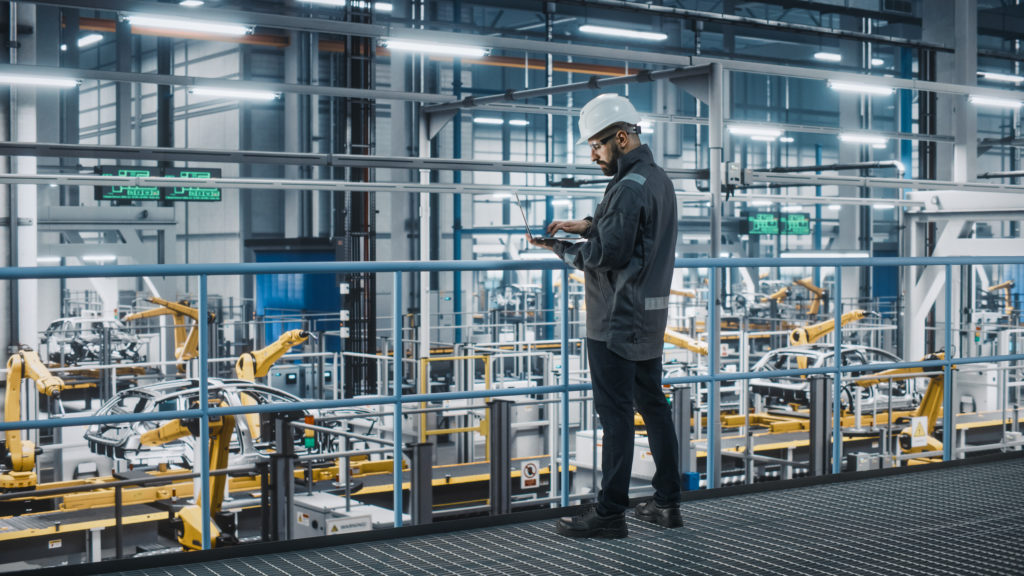
Let’s look at an example in the manufacturing sector. Imagine that an automotive plant wants to modify one step of the assembly process, shifting from human assembly to a machine.
They hope to see process improvements in efficiency and employee safety, but the team is concerned about quality, equipment reliability, and environmental factors for equipment performance.
Using PFMEA, the team reviews and ranks the risk of all the potential failures relative to other points in the process, including the likelihood of failure, the impact on production, and how difficult it may be to detect equipment failures or quality issues. They use the findings to decide how and when to implement the process shift and include modifications to lessen any risks.
Diferenças entre DFMEA e PFMEA
Existem várias diferenças importantes entre a DFMEA e a PFMEA. São utilizados em diferentes pontos do processo de fabrico, para diferentes fins e, frequentemente, por diferentes partes interessadas. Esta tabela mostra como eles diferem em escopo, freqüência e aplicação:
| DFMEA | PFMEA | |
| Quando são utilizados | Durante os processos de conceção ou de nova conceção, antes do fabrico | Antes ou durante o processo de fabrico e, se necessário, de forma contínua |
| Porque são utilizados | Identificar falhas na conceção do produto que possam ter impacto na sua qualidade e na satisfação do utilizador final | Identificar falhas no processo que possam atrasar a produção, provocar uma paragem ou resultar em erros no produto final |
| Com que frequência são utilizados | Apenas durante o processo de desenvolvimento do produto, ou quando o produto está a ser redesenhado | Sempre que necessário, quando há alterações nos activos utilizados, após uma falha grave que precisa de ser melhor compreendida, ou quando há alterações no processo |
| Quem os completa | A equipa de produto, composta por especialistas em conceção, desenvolvimento e qualidade do produto | Membros da equipa de produção, incluindo supervisores, especialistas em controlo de qualidade, engenheiros de produção e outras partes interessadas |
| O que acontece com os resultados | Ajustes e melhorias na conceção, incluindo alterações nos materiais e na forma que melhorem a conceção e a função do produto | Melhorias nos processos para evitar falhas, tais como melhores práticas de manutenção, formação dos trabalhadores, inspecções e outras. |
When To Use DFMEA vs PFMEA
A DFMEA e a PFMEA são ambas partes importantes da criação do produto, mas devem ser utilizadas em alturas diferentes.
DFMEA is used during the design process, and some products may require several rounds. The initial DFMEA may be created during the preliminary design phase, and then another DFMEA may be completed before the final design goes to production. If the product is redesigned for improvements or changes are made to the design based on consumer feedback, another DFMEA should be completed before the redesigned product enters production. It should be used as many times as necessary to ensure the finished product has as few design flaws as possible and has been optimized for both safety and performance.
Similarly, a PFMEA may be completed multiple times. A manufacturing company may complete a PFMEA before ramping up production of a product to ensure it can meet quality and volume expectations. A PFMEA might also be completed after a major failure, when replacing equipment, or when implementing new processes.
A PFMEA could be completed an endless number of times if needed. If the process is still in use, it can be analyzed for continuous improvement.
Se ainda não tem a certeza se deve utilizar uma DFMEA ou uma PFMEA, faça as seguintes perguntas para determinar qual é a melhor opção para o seu caso de utilização:
- Are you trying to correct problems in the final product (DFMEA) or the production of it (PFMEA)?
- Em que fase do ciclo de vida do produto se encontra? Se o produto ainda estiver na fase de conceção, utilize uma DFMEA. Se o produto estiver em produção, utilize uma PFMEA.
- Are the problems you want to address more related to the design (such as component failures or material weaknesses), or the process (such as product assembly or equipment malfunctions)? If the former, use a DFMEA;, and if the latter, use a PFMEA.
How DFMEA and PFMEA Work Together
Apesar das suas diferentes aplicações, a combinação da DFMEA e da PFMEA é uma excelente forma de otimizar totalmente o processo de fabrico. A DFMEA permite-lhe reduzir o risco ao nível do produto, corrigindo potenciais falhas de conceção e assegurando que cada produto funciona como deveria. A PFMEA melhora então o fabrico do produto, conduzindo a menos defeitos e a menos desperdício de fundos. A vantagem de realizá-los em diferentes pontos do processo é que eles não se atrapalham mutuamente - são ferramentas sinérgicas de análise de falhas.
Benefits of Using DFMEA and PFMEA Together
While you may need to choose between DFMEA and PFMEA at different points in the manufacturing process, both should be used for the best risk management results. You will end up with better products and a more efficient manufacturing line while avoiding potentially disastrous recalls and downtime.
When you use DFMEA and PFMEA together, you’ll:
Mitigate Risk
Combining these risk management techniques helps identify potential failures early and often. DFMEA helps you identify high-risk design elements at or before the prototyping stage, and PFMEA focuses on process flaws that compromise production.
When you use only one strategy, or neither, you open yourself up to downtime, product waste, and longer production cycles — all of which cost you time and money.
Save Money
DFMEA helps you avoid product waste and recalls by highlighting design flaws before production begins. And with PFMEA, you’ll approach asset management proactively and resolve process steps before they result in failures.
By highlighting issues before large-scale production, you’ll use more of what you produce, avoid expensive repairs, and maximize production time with fewer rework phases. And in turn, you save money on recalls, repairs, and downtime.
Improve Quality Control
DFMEA helps measure the success of your design within the context of product goals, customer expectations, and regulations. This creates a thoughtful final product that meets quality standards. Meanwhile, PFMEA analyzes your production process to reduce or eliminate issues that could cause defects.
From design to production, DFMEA and PFMEA help ensure product quality consistency and preserve brand reputation.
How To Complete a PFMEA
Realizar até mesmo uma única PFMEA é um processo profundo e demorado, mas não precisa de ser demasiado complicado. Veja como completar uma PFMEA em seis passos.
- Form a Cross-Functional Team
The first step to properly reviewing a process is to build a team that has complete visibility into every step. It’s rare for an individual in an organization to know every single part of any process. Make sure everyone on the team has dedicated time to work on the PFMEA. - Conduct Process Mapping
Map out the entire process before the analysis starts. This should be fairly granular, as you’ll need to make note of every step along the way and mark down any potential critical points of failure. The more detailed the process mapping, the easier the rest of the analysis will be. - Identify Potential Failure Modes
Now it’s time to address the failure part of the analysis. Go step by step and identify ways that part of the process could go awry. Be thorough — consider any potential inefficiencies or gaps in the process. - Assign Severity, Occurrence, and Detection Ratings and Calculate RPN
Once failure modes have been identified, they must be ranked for prioritization. Rate each potential failure out of 10 (with 10 being the highest) by its impact on operations, likelihood to occur, and difficulty to detect. These ratings can then be used to calculate a risk priority number (RPN) and identify which failure modes should be addressed first. The higher the RPN, the higher the priority of the risk. - Develop an Action Plan
Now that we have a full list of potential failures and know which ones need to be prioritized, corrective action can be planned to mitigate the highest risk ones. - Track and Review
After action is taken, continuously review the results to gauge how effective risk mitigation was as well as the PFMEA itself. Adapt and improve as needed, and take what you learn into your next failure analysis.
How To Complete a DFMEA
Embora o objeto de uma DFMEA seja completamente diferente de uma PFMEA, muitos dos passos são semelhantes a um nível geral.
- Form a team. In this case, make sure members have a range of product design knowledge.
- Identificar os modos de falha do produto e as suas causas principais.
- Atribuir classificações de gravidade, ocorrência e deteção e calcular o RPN.
- Take action to address design risks, usually through redesign.
- Run a follow-up DFMEA to check if the RPN decreased. This helps confirm if further action is needed or if the product design is ready to move forward for manufacturing.
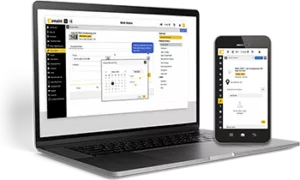
A DFMEA e a PFMEA são ambos processos importantes no desenvolvimento e fabrico de produtos. Quer esteja a conceber um produto para produção em massa ou a melhorar os processos numa fábrica, um sistema informatizado de gestão da manutenção, ou CMMS, pode ser uma ferramenta útil para acompanhar e melhorar as operações.
Recolha de dados para melhorar a precisão da DFMEA e da PFMEA
No matter whether you’re performing a DFMEA, PFMEA, or a different type of FMEA entirely, gathering real data will enhance the entire process. Using a CMMS as a risk assessment tool can help you identify trends in equipment failures and processes over time and show how process or design improvements have impacted them. Such documentation is important for continuous improvement and ensuring excellent product design and manufacturing quality based on actual insights.
A CMMS can also be key in increasing product reliability and improving RPN scores. By tracking assets and gathering performance data, your team will be well-equipped to perform thorough equipment analyses and boost performance with targeted maintenance.
Para saber mais sobre o que um CMMS pode fazer pela sua equipa, fale com um especialista ou solicite uma demonstração gratuita do eMaint CMMS.