
What’s the best way to detect early warning signs of asset failure? Field asset visibility. With real-time, comprehensive performance data, you can prioritize maintenance tasks to increase reliability and uptime.
But for too many organizations, asset visibility gaps lead to reactive, inefficient operations.
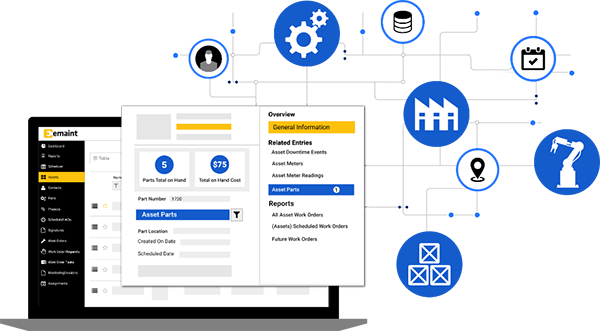
In this article, we’ll explore why your maintenance strategy may not be the problem, detail the risks of poor asset visibility, and share five common causes of visibility issues for maintenance teams. Finally, we’ll share actionable tips to improve your asset visibility.
Even the best maintenance strategies have asset visibility gaps
An effective maintenance strategy balances proactive approaches, such as preventive and predictive maintenance, with reactive strategies. For maximum uptime, you need optimal visibility across all facilities and assets — but that’s tough to achieve.
Preventive maintenance (PM) emphasizes regular maintenance performed on time-, usage-, or condition-based schedules. But without reliable, centralized access to performance data from all your organization’s assets, PM becomes laborious. While building an organized system of procedures, equipment sensors, performance logs, reports, and automated alerts, you need frequent field inspections to assess the health of each asset. And you can’t properly prioritize these inspections without the right data; consequentially, assets lower on the inspection list are at risk of breakdown.
Given all this, you might assume the solution is a strategy based on real-time monitoring, such as predictive maintenance (PdM). And yes, PdM relies on sensors that can alert maintenance teams to potential failures! But when you have a complex network of sensors that lacks centralized communication, all you really have is a bit of visibility with a lot of manual prioritization, along with many more breakdowns while you’re stuck issuing work orders.
See the problem? You can’t necessarily solve field asset visibility issues with new or different strategies — especially if you already conduct regular process audits. Instead, you need better insights.
Risks of poor asset visibility
Running maintenance operations with poor visibility is frustrating, time-consuming, and costly. Here are the primary risks of poor asset visibility:
- Unplanned downtime: Uptime is one of your most critical KPIs. But without effective asset visibility, your inability to detect potential failures increases breakdowns, resulting in unplanned downtime and lost revenue.
- Unexpected failures: Critical equipment failures have a cascading effect on your operations, impacting KPIs, revenue, profit, and timelines. The consequences can even spread to other teams, who may need to redirect resources to support you.
- Overreliance on reactive maintenance: When they lack asset visibility, maintenance teams spend much of their time reacting to unexpected problems. This is inefficient because it’s difficult to plan for, pulls resources from PM work orders, and creates an unpredictable work environment for managers and technicians.
- Poor inventory management: When failures are unpredictable, your warehouse must be ready for anything. As a result, you’ll probably over-order certain spare parts, which creates a low stock turnover ratio and increases lead times to repair assets requiring out-of-stock parts.
- Long work order completion times: Poor inventory visibility can mean technicians show up to repair an asset, only to discover the necessary parts are out of stock. Also, reactive maintenance tasks may require you to assign technicians from distant facilities, lengthening travel and overall completion times.
- Costly emergency maintenance: While proactive maintenance strategies have higher implementation costs, emergency maintenance is typically more expensive overall. That’s because of the need to reschedule and reallocate resources, the potential for longer travel when offsite techs must relocate, the higher likelihood of parts replacement vs repair, and the potential for irreparable failure requiring full asset replacement.
- Total equipment replacement: Catch potential failures early and you may only need to repair or replace a part. But undetected potential failures can lead to catastrophic breakdowns, requiring significant repairs or even total asset replacement.
5 common causes of poor visibility in field asset maintenance
What causes poor asset visibility? It’s not just a lack of sensors and monitoring equipment. Typical causes include:
1. Limited or rushed inspections
Every maintenance manager balances the importance of routine inspections with the size and availability of their maintenance team. But when preventive inspections fall behind, or teams excessively rely on reactive strategies, assets can operate for long periods between field inspections.
With overloaded schedules, technicians may rush through inspections. They may skip checklist items or fail to take adequately thorough notes. And even if they do everything right in the field, they may gloss over details when uploading documentation from the office.
The exact cadence of inspections depends on many factors, including equipment type, manufacturer recommendations, equipment age, and criticality. But a single missed, delayed, or incomplete inspection can lead to breakdowns. And vague documentation is just as risky.
2. Delayed work order completion and reporting
Some techs still rely on manual logs, using pen and paper to log recordings and field notes. Others take notes on mobile devices but can’t officially log readings and documentation until they’re online or in the office — hours or even days later.
Every minute that passes between inspection, data logging, and comprehensive reporting is another chance for potential failures to turn into breakdowns.
What’s more, technicians may do everything right, but unless your system assesses findings and issues automated alerts for potential failures, you still lack total asset visibility.
That’s how inefficient logging and outdated maintenance tools create harmful visibility gaps.
3. Disconnected systems
Maybe most of your assets have outdated sensors, but your newest facility has been upgraded to an advanced monitoring system with modern sensors. If those systems don’t communicate, you’re stuck managing two separate maintenance departments.
But even standardized sensors don’t help without integration and automation. You may still need to enter raw equipment data into spreadsheets, work order systems, and reporting tools manually. That disconnect increases administrative time, compounds the likelihood of data entry errors, and creates significant delays that can lead to unexpected breakdowns.
Siloed, fragmented systems create gaps, delays, and consistency errors, all of which can reduce potential failure detection.
4. Incomplete asset histories
Your spreadsheets only go back so far. And maybe your legacy software couldn’t cleanly export data, or your reporting interface is so confusing that you just can’t access historical data.
Whatever the root issue is, with incomplete performance data and trending analysis, you can miss potential failures hiding in plain sight. Historical records with detailed maintenance logs, parts replacements, failure indicators, and past breakdowns are crucial to anticipating and preventing future breakdowns.
5. Non-standardized processes
If your facility managers and area managers have differing standards for effective maintenance, you lack standardized processes. And if each of your maintenance managers has a unique method for onboarding and training techs, you have the same problem.
This creates widespread inconsistencies in maintenance practices, non-standardized records, and unreliable logs and trending reports — all of which can obscure asset visibility and cause unexpected failures.
Best practices to improve field asset visibility
- Implement and standardize asset monitoring: Get real-time visibility and automated alerts related to asset vibration, temperature, and other critical performance data. Use a single standardized system for clear visibility and integration with all tools and software.
- Improve physical equipment labeling: Don’t rely on paper manuals or complex intranet repositories to decode asset tags. Improve and standardize high-visibility labels on all equipment, allowing techs to identify assets, view historical data, pull up work orders, and find relevant parts. Labels with QR codes are an efficient and effective way to store this data. This is a low-cost, high-reward solution to improve visibility on the floor.
- Adopt a computerized maintenance management system (CMMS): For clear, comprehensive, and centralized asset visibility, choose a robust maintenance management software tool like eMaint CMMS. The right CMMS will convert chaotic data and processes into clear, intuitive systems that empower you to make data-driven decisions with confidence. A CMMS will simplify your workflows, improve reliability, and increase uptime.
- Leverage automations: Visibility alone doesn’t prevent breakdowns. Automated work orders, real-time alerts, and intelligent workflows streamline sluggish processes — so you get ahead of potential failures before they occur.
- Stay connected with mobile apps: Delayed reporting leads to delayed action. A mobile-first CMMS lets techs record, store, and report findings from the field, improving real-time visibility both on-site and in the office.
- Look for integrated field tools: Integrate equipment sensors, hand tools, work orders, and reporting for built-in automation with superior visibility.
How eMaint CMMS solves field asset visibility gaps
Take control of your performance with clear, consistent, real-time asset visibility. The intuitive eMaint interface provides real-time condition monitoring data, asset maintenance histories, current inventory, and more — all on one centralized platform. Better asset visibility provides the data you need to forecast effectively, improve decision-making, and streamline maintenance operations.
Plus, eMaint is part of the Fluke Reliability family. Fluke produces sensors, tools, apps, and software to connect every aspect of your maintenance operations under one trusted name.
Chat with your eMaint representative to learn more and get started today.