
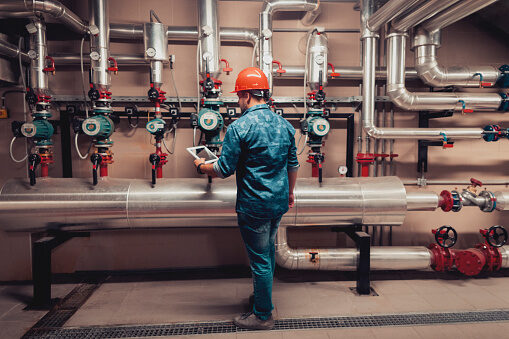
Whether it’s a room full of production equipment or a fleet of vehicles, every business has assets that keep it running. And with every asset comes necessary maintenance tasks, which produce maintenance costs over time.
While it’s important to service equipment regularly to keep it running well, maintenance costs add up quickly when machines break down or need emergency repairs. Keeping these surprise expenses down can be a struggle, especially for asset-heavy industries. Here, we’ll discuss the different types of maintenance costs, strategies you can use to reduce them, and how computerized maintenance management software (CMMS)can help.
What Are Maintenance Costs?
Maintenance costs include all the expenses associated with keeping critical assets in optimal condition. Routine inspections, cleaning, and part changes all incur maintenance costs. So do emergency repairs.
There’s no getting around it: keeping physical assets up and running means investing in a reliable maintenance program. Fortunately, modern technology makes it easier to keep your maintenance costs low, without reducing quality. Digital tools like a CMMS increase maintenance efficiency, which translates into savings throughout the organization.
The process is straightforward: track exactly where your maintenance spend is going, and then implement tools and strategies to eliminate all the unnecessary costs. Switching to a proactive maintenance approach, like predictive maintenance or preventive maintenance, dramatically reduces maintenance costs. Done right, this will also lead to longer asset lifespans and reduced downtime.
Examples of Maintenance Costs
Maintenance costs encompass all labor and material expenses that go into maintaining physical assets. That means maintenance of production equipment, like conveyors and presses, as well as infrastructure like pumps and power lines. HVAC maintenance, basic building management, and vehicle maintenance all incur costs as well.
Maintenance tasks typically fall into one of three categories:
- Preventive maintenance, which refers to all routine maintenance tasks required to keep critical equipment in good condition. These tasks happen well before asset failure in order to prevent breakdowns. Preventive tasks include cleaning and changing parts, as well as machine inspections.
- Reactive maintenance, which includes major repairs carried out after an asset failure. Reactive maintenance refers to unplanned, corrective repair work.
- Predictive maintenance, which includes the cost of IIoT sensors and AI-based software solutions. Predictive maintenance is proven to reduce downtime and operational costs by anticipating maintenance needs ahead of time.
Aim for a higher percentage of your maintenance costs to go on proactive strategies like preventive and predictive maintenance, which extend asset lifespans and reduce costly breakdowns. Minimizing reactive maintenance will reduce your overall costs while increasing productivity.
How to Calculate Maintenance Costs
Tracking your maintenance costs is the first step to reducing them. The more granular you can get, the better, because your goal is to pinpoint exactly where your costs are too high.
A CMMS like eMaint keeps track of numbers such as:
- Cost of labor
- Cost of parts and materials
- Vendor costs
- Energy costs
CMMS software also lets you drill down and see exactly which assets generate the highest maintenance costs. You can check your workflows for waste and idle time, and bring in inventory detail to check for bottlenecks.
The process is much faster than the old spreadsheet-based approach; it’s also more valuable, since it allows you to create reports and examine your data from many different angles. Tracking your data with a CMMS is the first step to reducing maintenance costs.
5 Ways to Reduce Maintenance Costs
The right strategies can keep your costs low into the future. Here are some best practices.
Optimize Your Preventive Maintenance Program
If you’re not already using preventive maintenance, design a preventive maintenance program to stay ahead of asset failure. Customize the program for your critical assets’ most common issues.
Read the eMaint guide to building a preventive maintenance program here.
If you’re already using preventive maintenance, audit your program to ensure that all of your PMs are designed to prevent specific failure modes. Audit your work orders as well to make sure you’re not over-maintaining your assets.
Implement Condition-Based Monitoring
Use a network of IIoT sensors (or handheld monitors) to track asset health data like vibration levels and thermal emissions. Every asset has a baseline of healthy vibration and temperature; changes from the baseline can indicate emerging asset faults. Use a CMMS to analyze your asset data and trigger alerts at the first sign of a fault. Early detection means less costly repairs.
Track Maintenance Metrics
Track KPIs like mean time to failure (MTTF) and mean time to repair (MTTR) to spot inefficiencies and problem areas in your maintenance program, and make informed choices about repair vs. replace. Monitor PM completion rates and wrench time as well. Done right, this will increase your maintenance efficiency and lower costs.
Standardize Workflows
Most organizations waste hundreds of hours a year on inefficient maintenance processes. Create clear, step-by-step guidelines for your crew to follow so the job gets done the right way, every time – even across job sites. Build checklists into your work orders, along with asset data and safety information, to streamline processes. This saves time and eliminates the need for rework.
Monitor Maintenance Costs
Tracking your maintenance spending will help you reduce costs, especially when you use CMMS software to analyze trends and patterns. Identify the assets and workflows that drive up costs, and find new, more efficient approaches to maintenance. If you’re overseeing multiple facilities, monitoring costs gives you even more data to work with.
Reducing Maintenance Costs with a CMMS
CMMS software improves efficiency and slashes costs by:
- Tracking asset health using condition-based monitoring
- Optimizing preventive maintenance processes
- Standardizing workflows
- Improving spare parts inventory management
- Monitoring maintenance KPIs and generating detailed reports
- Tracking maintenance spending at a granular level
The results are hard to argue with: greater efficiency, more uptime, and of course, a sharp reduction in cost.
To learn more about eMaint CMMS, visit our website or try a free demo today.