
The pharmaceutical industry is rapidly transforming with the adoption of digital technologies and new, IoT-driven approaches like continuous manufacturing. As organizations pivot to new solutions and strategies, change management and regulatory compliance pose constant challenges.
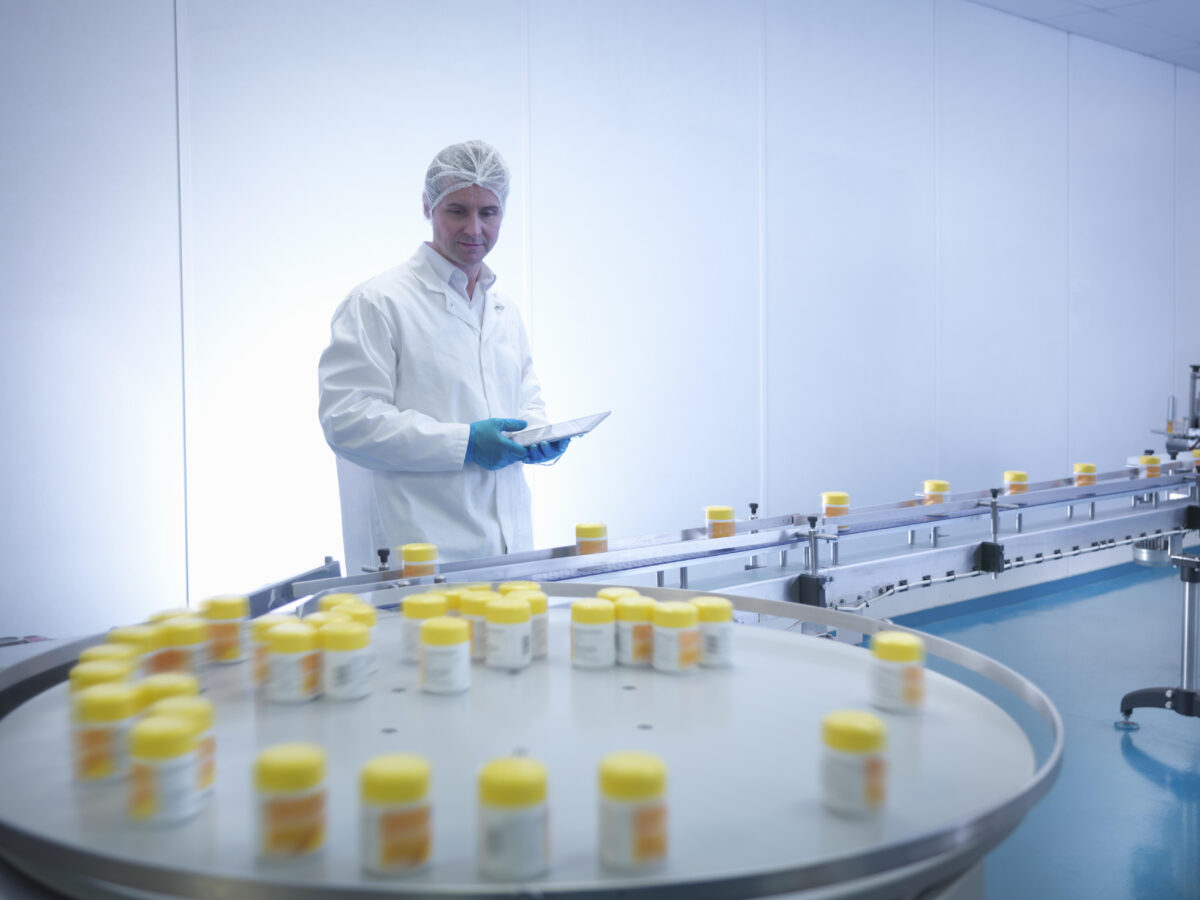
Equipment maintenance plays a critical role in regulatory compliance, but it’s often overlooked or minimized, even by experienced change control teams. We’ll talk about the most frequently overlooked issues at the convergence of equipment maintenance and change management. We’ll also explain how digital tools, like a computerized maintenance management system (CMMS), help streamline Good Manufacturing Practices (GMP) compliance.
What 21 CFR says about regulatory compliance for GMP organizations
Life science organizations that conduct business in the United States are subject to Food and Drug Administration (FDA) regulations set forth in Title 21 of the Code of Federal Regulations, or 21 CFR.
21 CFR Part 211 mandates that any changes to production or procedures must be reviewed and approved by the company’s own quality assurance department. That process must be thoroughly documented, with the necessary internal and external approvals recorded and saved. While the approval process is internal, the FDA verifies compliance with the regulations during routine inspections.
What EU GMP regulations say about change management
The European Medicines Agency’s GMP regulations are set forth in a series of documents called EudraLex Volume 4. Like the FDA, EudraLex mandates a formally documented change management solution whenever there are significant modifications to production equipment, facilities, or processes.
There are formal and functional differences between FDA and EudraLex regulations, but both sets of regulations emphasize meticulous recordkeeping and traceability. All changes to equipment and facility maintenance must be carefully documented and approved to ensure that critical assets continue to function correctly and produce safe, effective, and reliable products.
Here are some of the most common change management issues that maintenance teams struggle with.
Failing to update maintenance plans to reflect equipment upgrades
It’s standard practice for auditors to request detailed maintenance plans along with proof of maintenance during GMP audits. Regulators want confirmation that your organization consistently follows a preventive maintenance and calibration schedule. That schedule must represent all of your manufacturing equipment, including recent acquisitions.
As soon as you acquire a new piece of equipment, you must create a maintenance plan for it. That means updating your existing asset criticality hierarchy and preventive maintenance schedule; you also must decide how to allocate your maintenance resources.
Failing to update your preventive maintenance schedule or your condition monitoring program can lead to citations, warning letters, or even shutdowns.
Providing inadequate training in new technologies and strategies
Personnel in GMP organizations must be fully trained for their current roles. Whenever your standard operating procedures (SOPs) change, your staff needs appropriate training to stay up to date. Likewise, when you implement a new maintenance strategy, your team must be retrained. All training must be fully documented, and records should be available to inspectors upon request.
For example, if you’re switching to a predictive maintenance strategy (PdM), your crew needs training in sensor and IIoT technology, asset criticality, and condition-based monitoring (CBM). By the same token, if you’re overhauling your preventive maintenance program, your team needs to be trained in all new procedures and priorities.
Failing to adequately train your employees — or document their training — can jeopardize your GMP compliance.
Lack of attention to minor changes
Too often, GMP organizations fail to correctly document and obtain approval for seemingly minor changes in their equipment maintenance programs. Upon discovery, missing signatures or incomplete logbooks can create major headaches and result in warning letters or penalties.
Even small changes, like using a different lubricant for your production equipment or replacing a component with one made from a different material, must be evaluated to ensure they don’t affect the purity of the final product. Additionally, changes to your existing maintenance workflows must be rigorously assessed, documented, and approved by your quality assurance (QA) team.
It’s also important to carefully manage vendor relationships to ensure that any changes in your supplies are carefully evaluated, documented, and approved.
Failure to validate (or revalidate) maintenance software
A computerized maintenance management system (CMMS) helps GMP organizations with every stage of compliance. However, you are required to validate your CMMS if you use it to demonstrate regulatory compliance. You must also revalidate your CMMS under certain circumstances.
A validated CMMS must be installed, configured, and tested to ensure that it performs according to GMP specifications. Your CMMS needs revalidation when you:
- Upgrade to a new version of your existing CMMS, especially when there are changes to the core functionality
- Change the scope of your CMMS deployment
- Make major changes to your IT infrastructure, such as changing servers or operating systems
- Switch to a different CMMS provider
An experienced vendor (like the expert team at eMaint) can help with every stage of CMMS validation and revalidation, so there’s no reason not to get it done.
Other commonly overlooked change management issues for GMP organizations
Here are some other frequent change management issues:
- Vendor issues: suppliers may change their components and fail to inform you. Manage your relationships so that you stay ahead of surprises.
- Neglecting facility management: HVAC, electrical supply, and air quality all require careful management. Be sure to document and plan for any changes in your facilities.
- Inadequate calibration: Improperly calibrated equipment can trigger a wholesale change management process, requiring a full inspection of recent batches and mandatory repairs.
Maintaining compliance with eMaint CMMS
Change management requires meticulous attention to detail and painstaking recordkeeping. eMaint CMMS can help.
eMaint uses audit trails and customizable dashboards to store all your compliance data in one place. Signatures, logbooks, and approvals are all at your fingertips. Your asset data and maintenance records are also stored in the same searchable database. This makes the change management workflow easier to manage.
Preparing change management documentation
eMaint keeps a storehouse of data that cuts time spent creating impact assessments and risk management plans. Updating your asset criticality hierarchy is also easier thanks to the asset data stored in eMaint.
eMaint has robust reporting features that help you create tailor-made proactive maintenance programs and calibration schedules for your whole fleet of assets. Updating those maintenance plans is fast and easy — eMaint even helps with scheduling, so you can make the best possible use of your resources.
Implementing change management
eMaint can help integrate your new standard operating procedures into every work order, ensuring that they’re implemented consistently.
eMaint can also track employee certification and training, creating digital logs for inspection. The scheduling function ensures that new preventive maintenance and calibration tasks are assigned to employees with the necessary training.
Demonstrating compliance with eMaint
eMaint stores all of your change management documentation, making it easily accessible. Change control requests, approvals, and signatures are all available whenever inspectors request them. Likewise, your equipment validation and qualification records are always on hand.
Intuitive audit dashboards and change logs mean you’re never scrambling for the right documents when the inspectors show up. The result? Compliance is easier than ever, even in the midst of change.