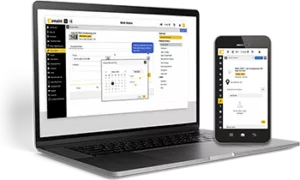
Asset performance management (APM) is a strategic methodology employed by businesses to enhance the efficiency and reliability of critical assets used in daily operations. Companies leverage APM to optimize the functionality of diverse assets such as infrastructure, machinery, vehicles, and digital systems to maximize productivity and minimize downtime.
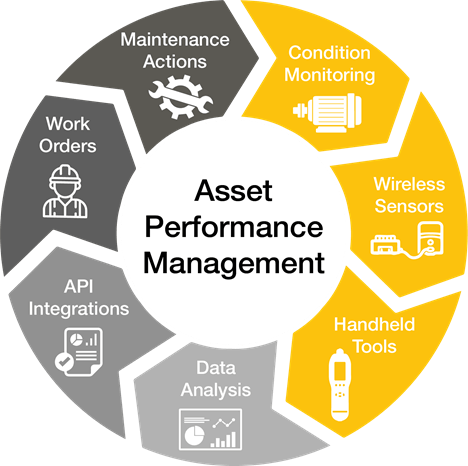
APM is all about pairing modern maintenance software with technology like sensors for more effective asset management. Collecting condition monitoring data and analyzing it with software analytics can help reduce asset failures and unplanned downtime, ultimately extending an asset’s useful life.
Most maintenance teams already use a computerized maintenance management system (CMMS). CMMS software puts an organization’s asset maintenance information, processes, and tasks in one place. From work orders to inventory management and much more, CMMS software is a vital component of optimizing a maintenance strategy.
Asset performance management software takes your CMMS to the next level by feeding it real-time machine health data. Examples of assets included in APM programs are motors, fans, pumps, machines, vehicles, and more.
When you know how and when your assets are likely to fail, you can plan and take action, reducing risks and increasing reliability.
What Are the Benefits of Asset Performance Management (APM) Software?
With asset performance management software, you can turn data into insights. Data alone lacks value until it is given context — and made actionable. APM software collects and analyzes information from your machines and makes it easier to make better decisions about when to take action to meet maintenance and performance goals.
Making the most of asset performance means reducing the costs and risks at all stages of an asset’s lifecycle, from design to decommissioning. APM helps teams use real-time knowledge to tackle today’s challenges and look ahead to prepare for tomorrow.
Here are some of the benefits of APM software:
Less Unplanned Maintenance
When critical assets unexpectedly fail, it becomes a disruptive emergency that costs your organization time and money. APM software collects and analyzes asset performance and health data, helping your teams improve maintenance forecasting. That way, you can plan repairs according to predictive or preventive maintenance schedules, far before failure strikes.
More Asset Uptime
Predicting future failures means you can take corrective action before it happens instead of facing costly unplanned downtime. APM software utilizes AI and machine learning capabilities to ensure your maintenance teams stay ahead of the curve, maximizing critical asset uptime and keeping operations uninterrupted.
Improved Efficiency
Instead of performing preventive maintenance on a calendar-based schedule, APM software uses data from sensors so your technicians only perform maintenance when it’s truly needed. This reduces the risk of downtime and wasteful over-maintenance. APM software integrates with IoT (Internet of Things) sensors to provide real-time access to asset performance data, so opportunities to optimize processes are always visible.
How to Measure Asset Performance
Asset performance can be measured in several ways. Depending on your organization and assets, certain key performance indicators (KPIs) can provide insights into asset performance. This information plays an important role in your asset performance management system.
The more data you have about each asset, the easier your job will be as you set out to develop your APM system. You can measure an asset’s performance against its historical performance over time, and also compare it to other similar assets to gain insight.
Here are a few of the most important KPIs to consider:
Mean Time Between Failure
Mean Time Between Failure (MTBF) is a KPI indicating the length of time between repairs for each asset. MTBF is normally expressed in hours. It also doesn’t include planned maintenance. Instead, it tells you how long each asset stays up and running before needing to be repaired.
The goal of an asset performance management system is to increase the number of hours between repairs, resulting in a longer asset lifecycle and a decrease in unplanned downtime.
Overall Equipment Effectiveness
Overall Equipment Effectiveness (OEE) is another asset performance KPI. This KPI measures the availability, performance, and production quality of the equipment over the time measured.
After you implement your asset performance management system, you should start to see improvements in OEE scores for your assets.
Mean Time to Repair
Mean Time to Repair (MTTR) measures the average time it takes to repair an asset and return it to operation.
MTTR can be improved with better maintenance practices like predictive maintenance, which helps catch and correct problems before they become major issues with longer repair times.
How to Build an Asset Performance Management (APM) Program
Building a successful APM system starts with gathering and analyzing information about your assets, along with their maintenance history. If you’re already using a CMMS, this could be as simple as running a report. However, if you’re using spreadsheets or have paper maintenance records, gathering and analyzing data could be an enormous undertaking.
You’ll also need to know which assets are most critical to your organization. These are the assets that, when they break down, can completely shut down production or significantly impact other assets. An asset criticality analysis identifies these assets, and as you build your APM system, you can prioritize the assets that are most important to your operation.
Next, build a plan to optimize each asset’s maintenance schedule. A truly optimized maintenance schedule takes planned maintenance into account, scheduling it during planned downtime to maximize uptime and match employees’ schedules. But an effective asset performance management program also implements predictive maintenance (PdM) solutions, adding insights from sensors or other data to optimize maintenance practices.
Predictive maintenance provides insights into asset health that help teams find and address developing issues before they turn into machine failure. Asset performance management software can assist with scheduling and managing both planned and predictive maintenance schedules.
The final step is to monitor asset performance data to determine the success of your APM system. Like any process on the production floor, your APM system should be continuously improved to ensure you receive the maximum benefit from the program. As you continue to gather data, you can make small changes to create an even more effective asset performance management system.
Asset Performance Management and Predictive Maintenance
Today, maintenance teams are increasingly turning to predictive maintenance solutions. By using condition monitoring sensors and software to track asset health, they can catch potential failures, preventing damage or unplanned downtime.
A study by the Deloitte Analytics Institute found that, on average, predictive maintenance both increases productivity and lowers maintenance costs by 25%. It also reduces equipment breakdowns by 70%.
Productivity, uptime, unplanned downtime, and maintenance costs are a few metrics organizations can track to evaluate the effectiveness of their maintenance strategy. When a team tracks its metrics and monitors its effectiveness, it can find opportunities for continuous improvement.
However, many organizations have cobbled together an ad hoc suite of tools, such as stand-alone sensors, tracking spreadsheets, and software platforms to manage and monitor their assets. These disconnected tools increase the likelihood of blind spots, where organizations are missing out on key insights about their assets. Operational silos keep teams from truly leveraging asset performance management.
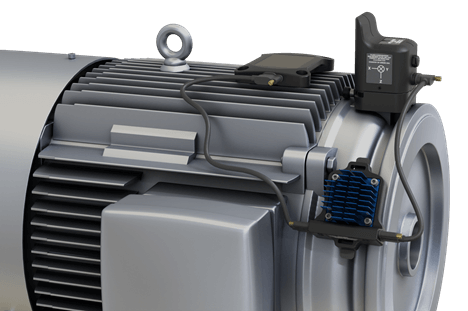
A centralized asset performance management system eliminates these inefficiencies by integrating condition monitoring sensors, such as vibration and temperature sensors, with asset performance software like eMaint CMMS, forming a unified system. This integration leverages APIs and cloud technology to deliver real-time insights, so teams can prioritize maintenance tasks and achieve asset performance optimization.
How to Leverage Asset Performance Management
An increasing number of technologies are shaping asset performance management today. Here are some that enable teams to make the most of asset performance:
Data availability: Making better decisions about assets is only possible with accurate, high-quality data. Today, this data is more available than ever. Asset performance management software enables users to collect real-time asset performance data as well as maintenance history. Additionally, you can run reports and use that information to inform decision-making processes regarding asset repair and replacement.
Cloud storage: A cloud-based CMMS offers agile, scalable asset performance management that’s accessible even if local computers go down. Users can monitor assets remotely and schedule required maintenance, even if they aren’t on-site.
Condition monitoring sensors: Condition monitoring used to require a knowledgeable human to be available on-site in order to manually check on assets. But now, condition monitoring sensors can monitor and collect temperature and vibration data and send it to the cloud for processing and analysis. On- or off-site users can monitor for problematic changes and request maintenance to correct potential failures before they happen.
Artificial intelligence: When combined with a CMMS and condition monitoring sensors, automatic AI analysis can identify potential faults and prescribe maintenance recommendations, enhancing asset performance management without requiring extra staff to monitor assets.
All of these features simplify asset performance monitoring and provide insight and tools to help develop and improve your asset performance management strategy.
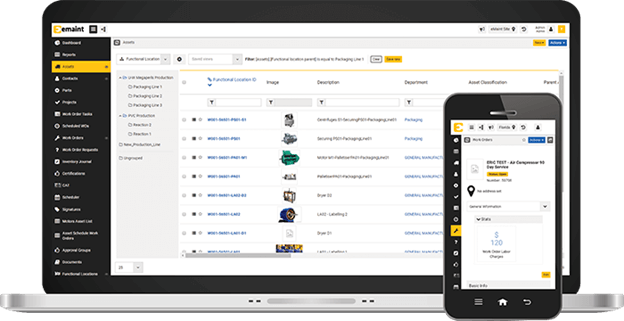
Driving Continuous Improvement Through Asset Performance Analytics
Driving Continuous Improvement Through Asset Performance Analytics
Improving asset performance management requires both a) learning how your organization is performing currently, and b) optimizing your APM strategy to maximize uptime. The easiest way to gather this data and analyze its performance is by collecting asset performance analytics with a CMMS.
A CMMS uses data from condition monitoring sensors, maintenance history, work orders, production systems, and other sources to reveal patterns that aren’t visible in day-to-day operations. Teams can identify recurring issues like components that fail sooner than expected or machines that need frequent repairs and use that insight to refine their maintenance strategies.
Over time, this continuous feedback loop strengthens maintenance programs. When APM insights are shared across departments through a CMMS, organizations can make better maintenance decisions that continually improve asset performance management. Ultimately, focusing on continuous improvement prolongs asset lifespan, reduces maintenance costs, and increases uptime.
How to Implement APM Software
Demand for APM software is increasing as more organizations realize the value of combining software and sensors to maximize asset performance. APM software helps asset-intensive organizations get a connected, centralized view of all of their assets and needs.
To make the most out of an APM software implementation, your organization will need to pilot and adopt Industrial Internet of Things (IIoT) technologies like vibration sensors that can monitor assets. You’ll also need to find a maintenance software program that can integrate machine health data with your organization’s other maintenance management processes.
The implementation process looks different for every organization, though the markers of success are often the same. Clearly defined needs and goals are crucial to successful implementation. Identify specific areas you seek to improve — such as reducing spending in a particular area of your maintenance budget — in order to help focus your work and planning during the implementation process.
The two main factors that contribute to failed implementations are poor project planning and the lack of a long-term vision.
If you don’t already have a CMMS, using one can mean the difference between failure and successful APM implementation. To see how eMaint CMMS works, check out a demo here.